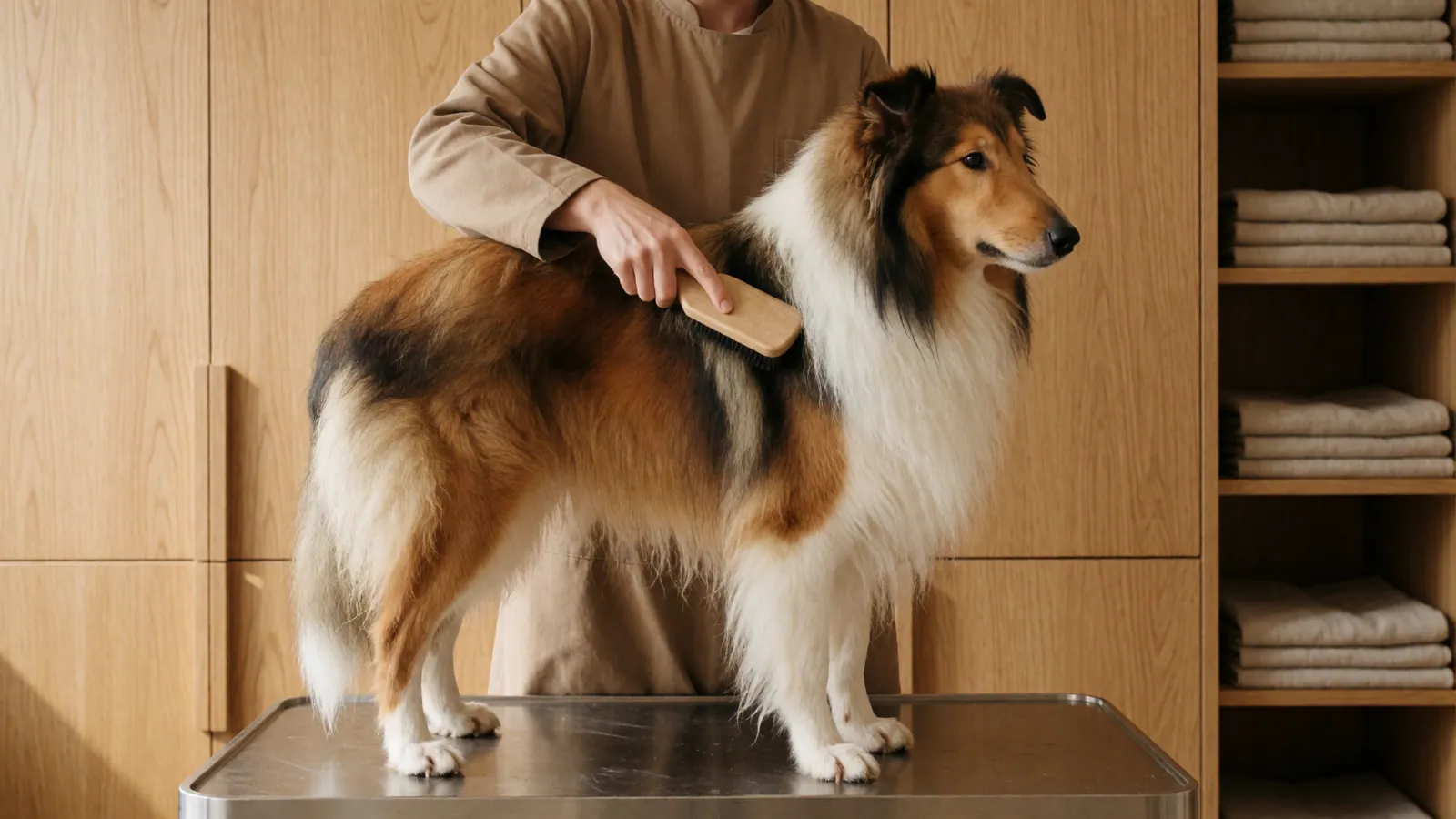
Is something actually wrong with your pet? Grooming is not the right answer to a medical problem. If your pet has a wound, a hot spot, an ear that smells or is painful, a lump, a limp, a rash that is spreading, is scratching itself raw, or is in any distress, see a veterinarian first and come to us afterwards. We will happily groom around a healing problem once a vet has seen it, and we will tell you honestly when we think something needs a veterinarian rather than a bath.
A mat is not simply tangled hair; it is hair that has felted together into a solid mass, often shrinking as it tightens and pulling the skin underneath it with every movement your dog makes. A mat close to the skin can pull hard enough to bruise, and one that has been there for weeks can trap moisture and dirt against skin that was never designed to be covered that tightly. This is why a badly matted coat is a welfare question, not just a cosmetic one, and why we take it seriously before we touch a comb to it.
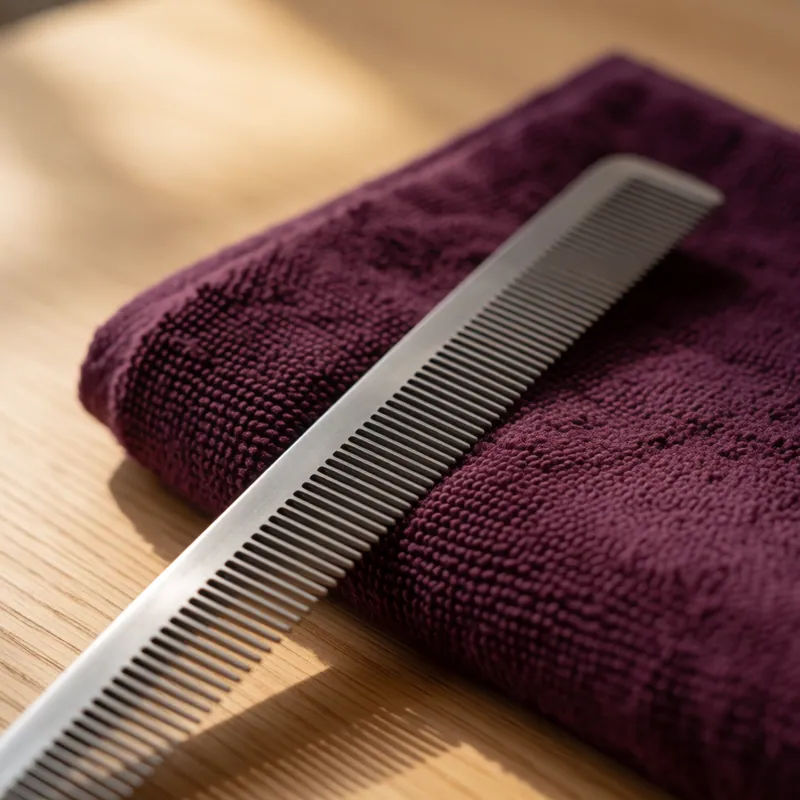
We judge a mat the same way every time: a comb, run from the tip of the hair all the way down to the skin. If it passes cleanly, the coat is brushed out, whatever it looks like on the surface. If it catches, snags or simply will not reach the skin at all, the coat is not brushed out, no matter how loose it appears from the top, and no amount of gentle coaxing changes that fact. This is the comb test, and it is the honest, repeatable way we decide what a coat actually needs rather than guessing from a glance.
De-matting is $25 per 15 minutes and capped at 30 minutes by policy, because past half an hour the process itself becomes the welfare problem: a long session of pulling at felted hair is uncomfortable at best and genuinely painful at worst, however carefully it is done. Past that point the kinder option is usually a short clip underneath the mat and a plan to grow the coat back properly, and we will tell you plainly when we think that is where your dog has landed rather than keep going for the sake of the haircut.
What a mat actually is, and why it matters
Not tangled hair — felted hair, pulling on the skin underneath it.
How a mat forms
Loose hair that would normally fall away gets caught in the coat around it instead, twisting together strand by strand until it felts into a single solid mass rather than a bundle of separate hairs. It tends to start in places with friction and movement — behind the ears, under the collar, in the armpits, between the back legs — long before it is visible from the top of the coat. Doodle and curly coats mat fastest — see /breed-guide.html.
Why it hurts
As a mat tightens it shrinks, and because it is anchored in the skin at one end, that shrinking pulls the skin along with it every time your dog moves, sits, or is simply touched in that spot. A mat close to the skin is not a cosmetic inconvenience at that point; it is a source of ongoing discomfort that most dogs cannot tell you about in any way beyond flinching.
What can be underneath it
Skin trapped under a mat for weeks can stay damp and warm in a way it was never meant to, and once a mat is removed we sometimes find skin that looks reddened, thin or sore where it had been pulled and covered for a long time. We will show you exactly what we found and tell you plainly if we think it is worth a veterinarian's look.
Why brushing at home matters more than any single visit
A coat combed to the skin regularly at home essentially never reaches this point, which is why we would always rather teach you the comb test and a workable routine than see the same coat matted solid every few months. See /grooming-schedule.html for how often your specific coat type actually needs attention between visits. Ask us to show you the test itself at any visit, at no charge.
This is a welfare question, not a grooming preference
How we handle a matted coat is decided by what is best for your dog first, and what you originally asked for second, every single time. If those two things do not line up, we will tell you honestly and let you decide, but we will not simply do what was asked if it means causing real discomfort to get there. The full policy behind this is written out at /matting-policy.html.
The comb test, and the 30-minute policy
One honest test, and one honest limit, applied the same way to every dog.
The test itself
A steel comb is run from the very tip of the hair all the way to the skin, in the direction the coat actually grows, at several points across the body rather than just one convenient spot. If it reaches the skin cleanly every time, the coat counts as brushed out, regardless of how it looks or feels on the surface from a distance.
What failing the test means
If the comb catches, snags, or stops well short of the skin, that section of coat is matted rather than simply tangled, and no amount of careful working with fingers or a slicker brush changes that fact on its own. This is the point where we start talking about time, not about trying harder with the same comb. We will show you exactly where it fails, not just tell you that it does.
Why 30 minutes, specifically
Thirty minutes is roughly the point where continued de-matting on a genuinely felted area stops being a reasonable use of a comb and starts being a long, repeated pulling on skin that is already under strain. It is a policy limit rather than a judgement about your dog individually, and it applies the same way to every animal that comes through the door.
What we do at the 30-minute mark
We stop, show you exactly what is left, and talk through the two honest options: continuing past the policy limit is not one of them, so the real choice is between a shorter cosmetic trim in that area only, or a fuller shave-down if the matting is widespread. You decide, with the full picture in front of you rather than a guess over the phone.
Why we will not simply push through it instead
Continuing past thirty minutes on a coat that has already failed the comb test does not usually save the coat — it mostly adds discomfort for a result that a clip would have reached faster and more kindly. We would rather have the honest conversation at the thirty-minute mark than have you collect a dog that has had an hour of that done to it.
The shave-down conversation, honestly
What it looks like, how it comes back, and the real risks worth knowing about.
What a shave-down actually looks like
Clipping under a mat leaves a short, even, sometimes slightly uneven-looking coat, occasionally shorter in one spot than another simply because the mat sat closer to the skin there than elsewhere. It is not the haircut you asked for originally, and we will tell you that plainly rather than let the result be a surprise at pickup. We will describe exactly what it looks like before you see it, not after.
How the coat grows back
Hair grows back at its own ordinary rate, generally somewhere around a quarter to half an inch a month depending on the dog and the season, and most coats look reasonably normal again within a few months with regular brushing in between. We are glad to talk through a realistic timeline for your specific dog and coat type. Regular brushing during that regrowth is what keeps it from matting straight back up.
The real risk: nicks and clipper irritation
A matted coat sits the blade much closer to the skin than a normal one does, simply because there is less clean hair between the two, which makes nicks and clipper irritation genuinely more likely than on an easy coat. This is not a hidden risk we downplay — it is a real and direct consequence of clipping close to skin that a mat has already been pulling on.
We tell you the same day, not let you find it later
If a nick or a patch of clipper irritation happens during a shave-down, you hear about it from us before you leave the building, shown exactly where it is, rather than discover it yourself at home later that evening. We would rather have that conversation directly than have you find a sore patch and wonder why nobody mentioned it. It happens rarely, and it is never hidden when it does.
No guarantees, and no sedation
We do not guarantee getting every mat out, and we do not guarantee a specific finished look, because both depend on how the coat actually behaves once we are in it, not on what looked possible from the outside beforehand. We also do not sedate a dog to get through a difficult de-matting or shave-down — that is a veterinarian's decision, not a grooming shortcut, and we simply take longer, break the appointment up, or stop instead.
De-matting & shave-down in western Queens
De-matting is $25 per 15 minutes, capped at 30 by policy. Past that, the honest answer is often a short clip and a plan to grow the coat back — we will tell you which, and why, before we start.
It starts the same way whatever you have booked: both hands over the whole animal before anything is switched on, so we find what is under the top layer rather than discover it halfway through. Then you are told the price and the finish time out loud, before you leave the building. If the coat turns out to be worse than it looked, we stop and call you, and you decide what happens next rather than finding out at collection.
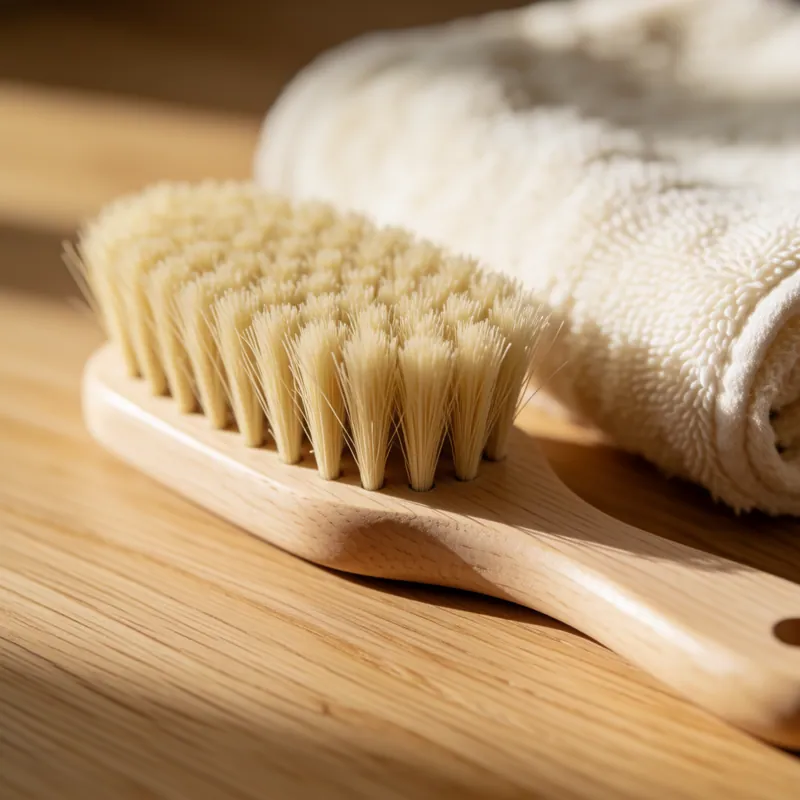
Grooming is not veterinary care. Grooming is grooming, not veterinary care. This page describes a service we offer. It is general information, and it is not a diagnosis, a treatment or veterinary advice for any particular animal. We are groomers, not veterinarians — we do not diagnose, we do not prescribe and we do not treat medical conditions. If your pet has a wound, a lump, an ear or skin problem, a limp or anything that worries you, speak to a licensed veterinarian who can actually examine it.
How we handle your animal. We do not sedate animals and we never will — sedation is a veterinary decision made by a veterinarian, not a grooming shortcut. We use no heated cage dryers of any kind, and no animal is ever left alone with a dryer running. Every pet is hand-dried by the person grooming it. If your animal tells us clearly that it has had enough, we stop, and you get an honest conversation instead of a finished haircut.
Questions
De-matting & shave-down — the questions we are asked most
How do you decide if my dog needs de-matting or a full shave-down?
With a comb, not a guess. We run it from the tip of the hair to the skin at several points on the body — if it passes cleanly, the coat is brushed out; if it catches or will not reach the skin, that section is matted. De-matting is billed at $25 per 15 minutes, capped at 30 by policy, and past that point we talk honestly about a shave-down rather than keep going.
Why is de-matting capped at 30 minutes?
Because past that point, continued de-matting on a genuinely felted area stops being reasonable and starts being a long, repeated pulling on skin that is often already sore underneath the mat. It is a policy limit that applies to every dog the same way, not a judgement about yours specifically, and it exists because welfare matters more to us than finishing the exact haircut that was originally asked for.
Will my dog's coat grow back after a shave-down?
Yes. Hair grows back at its own ordinary pace, generally somewhere around a quarter to half an inch a month, and most coats look reasonably normal again within a few months of regular brushing in between visits. We are glad to give you a realistic timeline for your specific dog and to book the next few visits around that regrowth.
Is de-matting painful for my dog?
It can be, which is exactly why we test with a comb before we touch anything to a felted area and why we stop at 30 minutes rather than push through. A mat that is genuinely tight to the skin is already uncomfortable before we start, and a long session dragging a comb through it does not necessarily improve on that — a short, careful clip often does.
What are the actual risks of shaving a matted coat?
The main one is that clipping sits the blade closer to the skin than usual, because a mat leaves less clean hair as a buffer, which makes nicks and clipper irritation genuinely more likely than on an easy coat. If either happens, you are told the same day, shown exactly where it is, before you leave the building — we do not let you find it at home.
Can you guarantee you will get all the mats out without shaving?
No, and we would rather say that honestly than promise something we cannot control. Some mats come out with careful work inside the 30-minute policy limit; others are too tight and too extensive, and continuing past that point is not a kinder choice for your dog. We will tell you plainly which situation we think we are looking at before we start.
My dog is nervous about being brushed. Can you sedate her for the de-matting?
No — we do not sedate animals here, for de-matting or for anything else, because that is a veterinary decision that belongs to a veterinarian who has actually examined your dog, not a grooming shortcut. What we do instead is take it slowly, break the work into shorter sessions if needed, and stop the moment your dog has genuinely had enough.
How much does de-matting actually cost for a badly matted dog?
De-matting itself is $25 per 15 minutes, capped at $50 for the full 30 minutes by policy. Past that limit, we do not keep charging for more de-matting time — instead we talk about a shave-down, priced as part of the groom it replaces, and you will be told the full number before anything past that 30-minute point happens to your dog.
Related
Usually booked alongside this
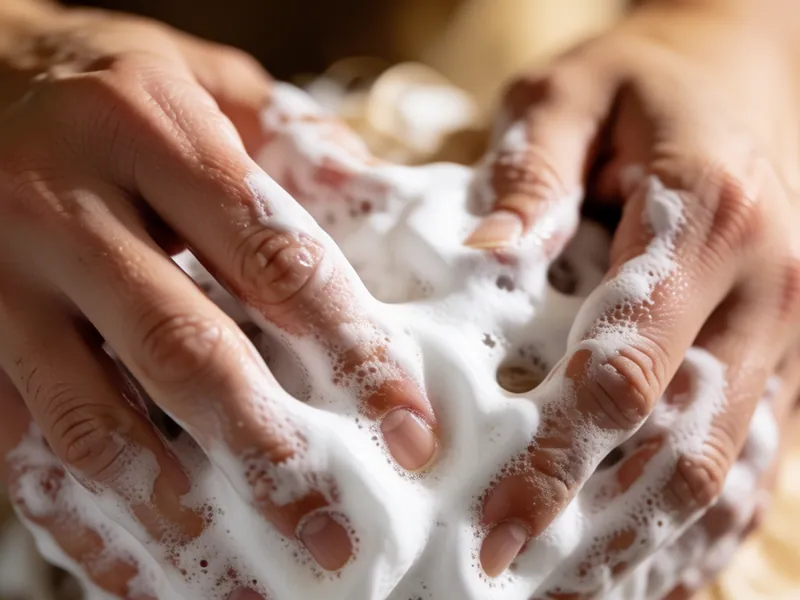
Bath, Skin & Coat
Soothing oatmeal bath
A gentle, fragrance-free oatmeal bath for a dog whose skin is easily upset, added to any groom for $22. It is a comfort measure, not a treatment, and we say so plainly.
Read more
Bath, Skin & Coat
Flea & tick bath
A $35 bath that washes fleas and ticks off your dog's coat today. It is not a treatment for an infestation — that is a veterinarian's job, on your dog and in your home.
Read more
Bath, Skin & Coat
Deep clean & deodorising
For the dog who rolled in something — skunk, mud, drain water, worse. Multiple washes with a degreasing shampoo and careful face work, for $45, with an honest answer about what one visit can and cannot remove.
Read moreA price agreed before the clippers come out
Book an appointment
Call the salon with your pet's breed, weight and roughly when it was last groomed, and we will give you the price and the honest timing on the phone. Nails, ears and sanitary tidies are walk-in whenever we are quiet, and Saturday morning is a dedicated walk-in nail clinic.