Is something actually wrong with your pet? Grooming is not the right answer to a medical problem. If your pet has a wound, a hot spot, an ear that smells or is painful, a lump, a limp, a rash that is spreading, is scratching itself raw, or is in any distress, see a veterinarian first and come to us afterwards. We will happily groom around a healing problem once a vet has seen it, and we will tell you honestly when we think something needs a veterinarian rather than a bath.
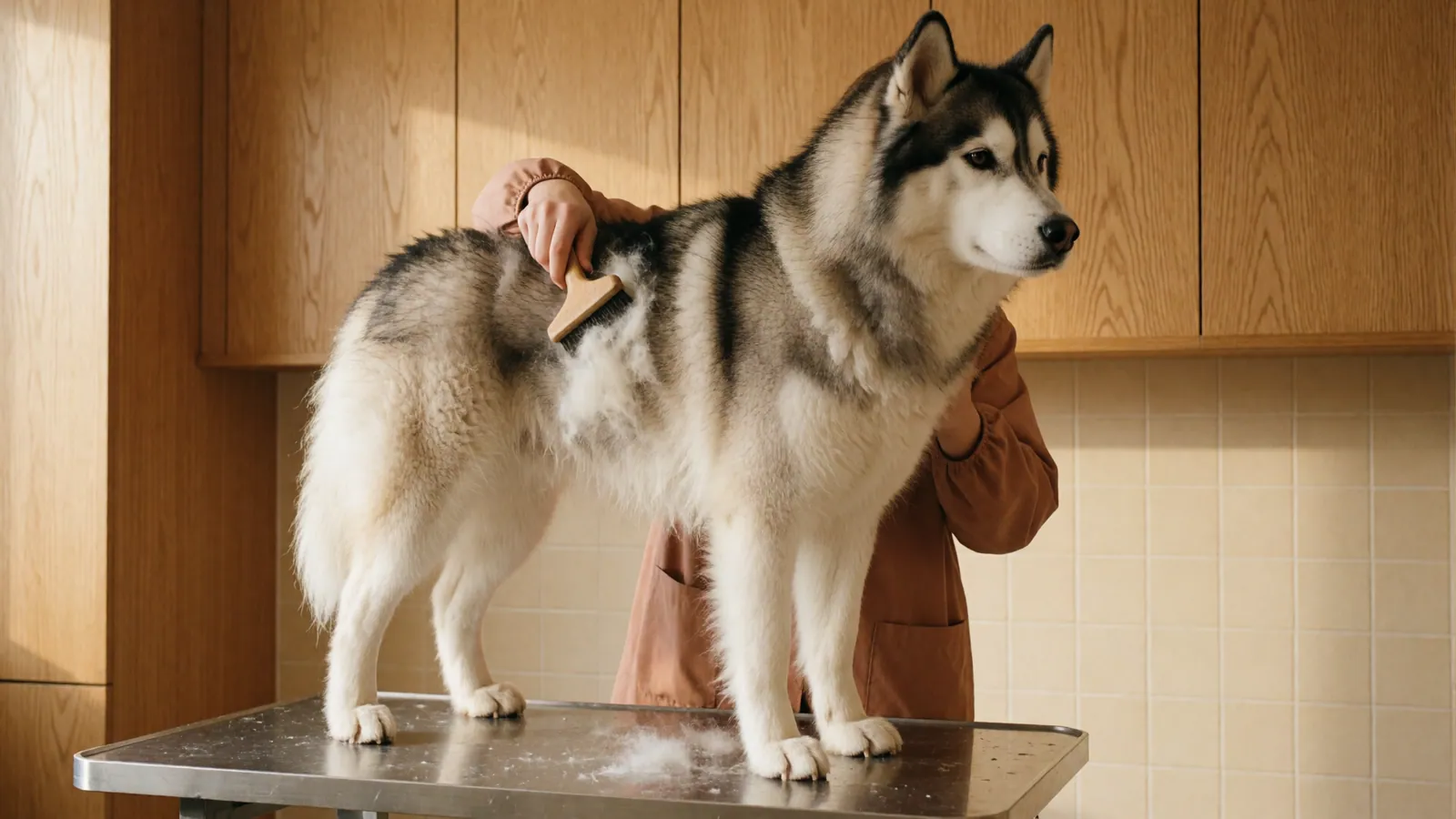
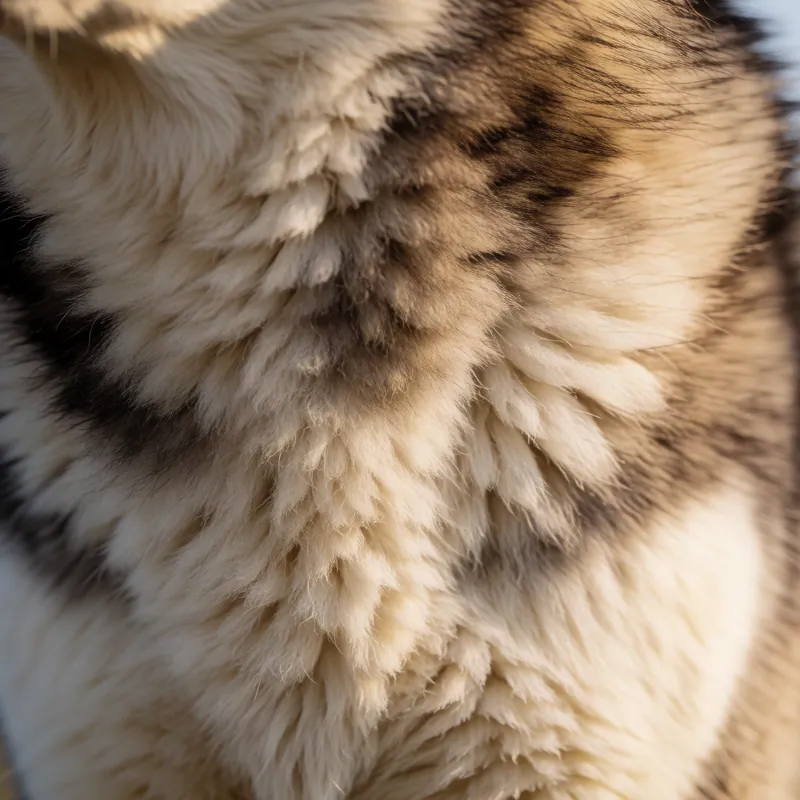
De-shedding in Woodside, NY is built for double-coated breeds — huskies, german shepherds, golden retrievers, corgis, akitas, chows and similar dogs — whose coat is made of two layers doing two different jobs. The guard coat is the coarser hair you see and feel on top, and it sheds lightly and continuously all year. The undercoat is the dense, soft layer underneath that holds heat close to the skin, and it lets go all at once, usually twice a year, in an amount that surprises almost every owner who has not been through it before. De-shedding is aimed specifically at that undercoat, not at the coat as a whole.
The appointment is a bath, a high-velocity hand-dry that blows loosened undercoat straight out of the coat rather than leaving it to work free over weeks of ordinary brushing, and then real hands-on time with an undercoat tool, working in sections down to the skin. It is genuinely more work than a standard bath, which is why it is priced and booked separately, and why the results are usually visible in the amount of coat left in the tub afterward — owners are often startled by the volume of it.
What de-shedding does not involve is shaving. A double coat insulates against summer heat almost as effectively as it does against winter cold, because the layer of trapped air between the guard coat and the skin works both ways, and clipping through it can change how the coat regrows — sometimes patchily, sometimes with a texture that never quite returns to what it was. We do not shave a double coat here except on a veterinarian's advice for a specific medical reason, and that is a decision for your vet to make, not us.
What actually happens at a de-shedding appointment
A bath, a proper dry and real time spent on the undercoat, not just a quick brush.
The coat check
We feel through the coat before starting, section by section rather than just across the back, to gauge how much undercoat is actually ready to release — a coat mid-moult lets go easily, almost coming away in handfuls, while one that is not quite ready yet will not, however long we work at it. This tells us honestly how long the appointment will actually take and whether today is genuinely the right day for it.
The bath
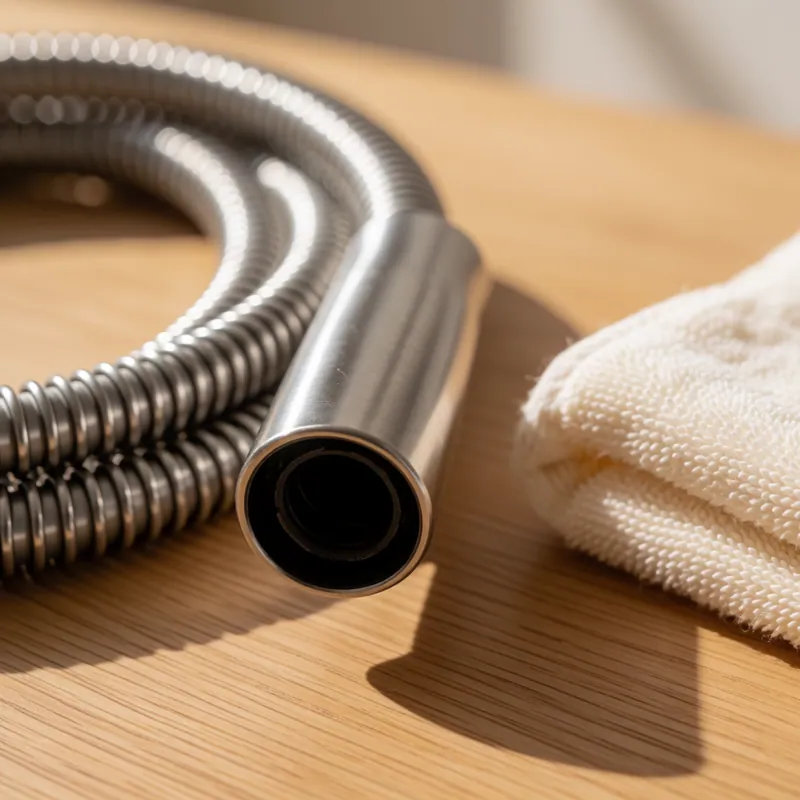
A wash suited to the coat, worked all the way down to the skin with real hands-on time rather than sprayed across the top and rinsed off again, because loosening the undercoat genuinely starts here rather than waiting for the dryer to do all the work. Rinsed thoroughly and checked twice, since shampoo left behind in a dense undercoat is considerably harder to rinse out completely than it is in a single-layer coat, and residue left in trapped hair is what causes itching afterward.
The high-velocity hand-dry
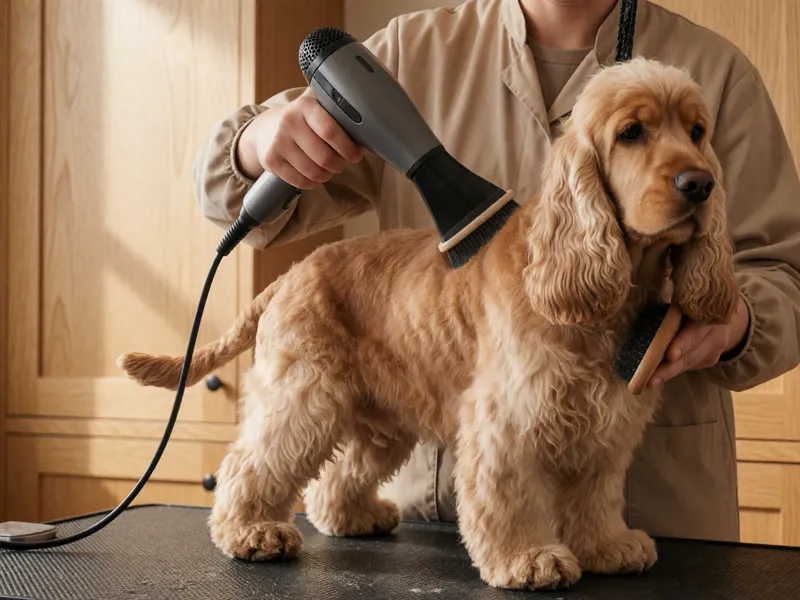
A hand-held high-velocity dryer, always held by the person grooming your dog and never left running unattended, blows the water and a great deal of already-loosened undercoat straight out of the coat far more effectively than a towel or a standard dryer could ever manage on its own. It is loud, dogs generally get used to it within a minute or two, and it is genuinely the fastest single part of getting a double coat properly clean, dry and ready for the comb-through that follows.
Hands-on undercoat work
An undercoat tool worked through the coat methodically, section by section and down to the skin each time, pulling out what the bath and the dryer have already loosened rather than cutting or pulling at anything that is not ready to come away. This is the slow, genuinely hands-on part of the appointment, and it is where the great majority of the actual loose coat comes out, not the bath or the dryer.
What you take home
A dog carrying noticeably less loose undercoat, a coat that sheds visibly less around the house and the car for some weeks afterward, and an honest sense of whether this was a one-time clear-out of a coat that had gone too long, or the start of a seasonal habit worth booking twice a year from now on. We will tell you which, based on what actually came out and how the coat looked underneath by the end of the appointment.
Why we do not shave a double coat
The house position here, and the reasoning behind it, plainly stated.
What the two layers actually do
The guard coat sheds rain and sun and takes the daily wear; the undercoat underneath traps a layer of air against the skin that insulates in both directions, holding warmth in through winter and helping keep heat out in summer. Removing the loose undercoat with proper de-shedding lets that system keep working; removing the whole coat with a clipper does not.
Why clipping does not make a double-coated dog cooler
A shaved double-coated dog loses the insulating air layer that helped keep it cool in the first place, and the bare skin underneath is now directly exposed to the sun rather than shaded by the coat above it. A properly de-shed dog with an intact, thinned coat is generally more comfortable in summer than a shaved one, not less.
How a shaved double coat can regrow
Coat that grows back after clipping sometimes comes in patchy, at an uneven rate across the body, or with a noticeably different texture than before — this does not happen to every dog, but it happens often enough that it is not a risk we take on a healthy coat for the sake of appearance alone.
The one exception, and it is not ours to decide
There are genuine medical situations where a veterinarian will advise clipping a double coat — before surgery, for example, or to manage a specific skin condition under treatment. That is a decision made by a veterinarian who has examined your dog, and we will always ask to see it in writing before we clip a healthy double coat down.
What we do instead
A proper de-shedding treatment, done thoroughly and with real hands-on time rather than rushed, and, if the coat genuinely needs it, repeated at the next seasonal moult rather than treated as a once-a-year emergency booked in a panic. We will tell you honestly what schedule your specific dog's coat actually calls for, based on the breed and on what came out this time, rather than a generic rule that ignores the individual dog in front of us.
When to book, and what to expect
Timing matters more with a double coat than with almost any other kind.
The spring surge
The first warm stretch of the year brings in almost every double-coated dog in the neighbourhood at once, because the undercoat lets go on a seasonal trigger rather than a fixed date. Booking in March rather than waiting for the obviously matted, obviously shedding dog in May usually means a shorter, easier appointment and a slot that is actually available.
A second appointment in autumn
Many double coats moult twice a year rather than once, dropping a lighter summer undercoat in spring before growing in a considerably denser winter one that then needs thinning again come autumn. A second de-shedding appointment at that point is not strictly necessary for every dog, but owners who book it consistently tend to see noticeably less shedding around the house through the coldest months, when everyone is indoors together far more than in summer.
How much coat actually comes out
It is genuinely more than most owners expect the first time — often close to filling a bin bag on a large husky or shepherd caught mid-moult, and enough that some owners ask, only half joking, whether there is any dog left underneath it. That volume is normal for the breed and the season, not a sign that something has gone wrong with the coat or the dog it came from.
Brushing at home between visits
A rake or undercoat tool used once a week during a normal stretch, and every day or two during an active moult, keeps a double coat from building back up to the point where the next appointment has to do all the work over again from nothing. It is genuinely worth the ten minutes it takes, and we will show you the right tool for your dog's specific coat and the right technique for using it at the desk if you ask.
Adding de-shedding onto a bath and brush or full groom
De-shedding is often booked as an add-on to a regular bath and brush or full groom appointment rather than as its own separate visit, which saves a second trip to the salon and a second bath your dog has to sit through. It generally adds a genuine thirty to forty-five minutes to the appointment rather than a token few, so ask when you book and we will hold the extra time needed rather than try to squeeze it in.
De-shedding in western Queens
A bath, a high-velocity hand-dry and real undercoat work for double-coated dogs, built to remove loose undercoat rather than cut it off — we do not shave a double coat except on a veterinarian's advice.
It starts the same way whatever you have booked: both hands over the whole animal before anything is switched on, so we find what is under the top layer rather than discover it halfway through. Then you are told the price and the finish time out loud, before you leave the building. If the coat turns out to be worse than it looked, we stop and call you, and you decide what happens next rather than finding out at collection.
Grooming is not veterinary care. Grooming is grooming, not veterinary care. This page describes a service we offer. It is general information, and it is not a diagnosis, a treatment or veterinary advice for any particular animal. We are groomers, not veterinarians — we do not diagnose, we do not prescribe and we do not treat medical conditions. If your pet has a wound, a lump, an ear or skin problem, a limp or anything that worries you, speak to a licensed veterinarian who can actually examine it.
How we handle your animal. We do not sedate animals and we never will — sedation is a veterinary decision made by a veterinarian, not a grooming shortcut. We use no heated cage dryers of any kind, and no animal is ever left alone with a dryer running. Every pet is hand-dried by the person grooming it. If your animal tells us clearly that it has had enough, we stop, and you get an honest conversation instead of a finished haircut.
Questions
De-shedding — the questions we are asked most
Will de-shedding stop my dog shedding completely?
No, and nobody honest can promise that — dogs with an undercoat shed to some degree year-round, with a much heavier release once or twice a year. De-shedding removes the loose undercoat that is already ready to come out, which noticeably reduces shedding around the house for some weeks afterward, but it is a treatment for the current build-up, not a permanent fix.
Will you shave my husky or shepherd for the summer to keep him cool?
No, not without a veterinarian's advice for a specific medical reason. The undercoat you want gone is actually part of what keeps a double-coated dog comfortable in summer, insulating against heat the same way it does against cold, and shaving it off can change how it grows back. De-shedding removes the loose undercoat properly instead, and most owners are surprised how much cooler and lighter the dog looks and acts afterward.
How much does de-shedding cost?
It runs $30 to $55 depending on your dog's size and how much undercoat has actually built up, and it can be booked on its own or added onto a regular bath and brush or full groom appointment to save a second trip. We will confirm the real number for your dog at the coat check rather than quote blind over the phone.
My dog is shedding everywhere right now. Is this an emergency, or can it wait?
It is not an emergency in any medical sense, but booking sooner rather than later during a heavy moult genuinely makes the appointment shorter and easier, since a coat mid-shed releases undercoat far more readily than one that has not started yet. If it is springtime, expect the whole neighbourhood to be booking at once, so calling a little earlier than you think you need to is a good idea.
Does de-shedding hurt my dog?
No — it is a bath followed by a hand-dry and an undercoat tool worked through the coat, and dogs generally tolerate it well, some visibly enjoying the brushing part of it. If your dog's coat is actually matted rather than simply shedding, that is handled differently and more carefully, and we will tell you which situation your dog is actually in.
How often does my double-coated dog actually need this?
Most double coats do well with de-shedding twice a year, timed around the spring and autumn moults, though a dog that is brushed at home only occasionally, or one with an unusually dense coat, may need it more often than that. See /grooming-schedule.html for the honest interval by coat type, and bring your dog in for a quick coat check if you are not sure which category yours actually falls into — it takes only a few minutes and there is no charge for it.
Can I just brush my dog at home instead of paying for this?
Regular brushing at home genuinely helps and we would encourage it either way, but a rake or slicker brush used at home typically reaches the surface of the undercoat rather than all the way through it, in the way a full bath, high-velocity dry and hands-on session can. Many owners do both — brushing weekly at home and booking a de-shedding appointment at the two seasonal peaks.
What is the difference between de-shedding and de-matting?
De-shedding removes loose undercoat that is ready to come out on a coat that is otherwise in reasonable condition. De-matting is a different, slower job for a coat that has actually tangled and felted against the skin, billed separately at $25 per 15 minutes and capped at 30 minutes by policy. A coat that is matted rather than simply shedding heavily needs the de-matting conversation, not a de-shedding appointment.
Related
Usually booked alongside this
Dog Grooming
Full dog groom
The complete appointment for a dog who needs the works: a coat check, a bath, a full hand-dry, a haircut suited to the coat in front of us, nails, ears and a sanitary tidy, priced before anything starts.
Read more
Dog Grooming
Bath & brush
The no-haircut appointment for a dog who needs washing and untangling rather than clipping: two washes on most coats, a full hand-dry, a brush-out, nails, ears and a sanitary tidy.
Read more
Dog Grooming
Haircut & styling
Breed trims, pet trims and everything between: the right blade length or guard comb chosen for the coat, scissoring finished on a fully dry coat, and a length matched to whatever suited your dog last time.
Read moreA price agreed before the clippers come out
Book an appointment
Call the salon with your pet's breed, weight and roughly when it was last groomed, and we will give you the price and the honest timing on the phone. Nails, ears and sanitary tidies are walk-in whenever we are quiet, and Saturday morning is a dedicated walk-in nail clinic.