Is something actually wrong with your pet? Grooming is not the right answer to a medical problem. If your pet has a wound, a hot spot, an ear that smells or is painful, a lump, a limp, a rash that is spreading, is scratching itself raw, or is in any distress, see a veterinarian first and come to us afterwards. We will happily groom around a healing problem once a vet has seen it, and we will tell you honestly when we think something needs a veterinarian rather than a bath.
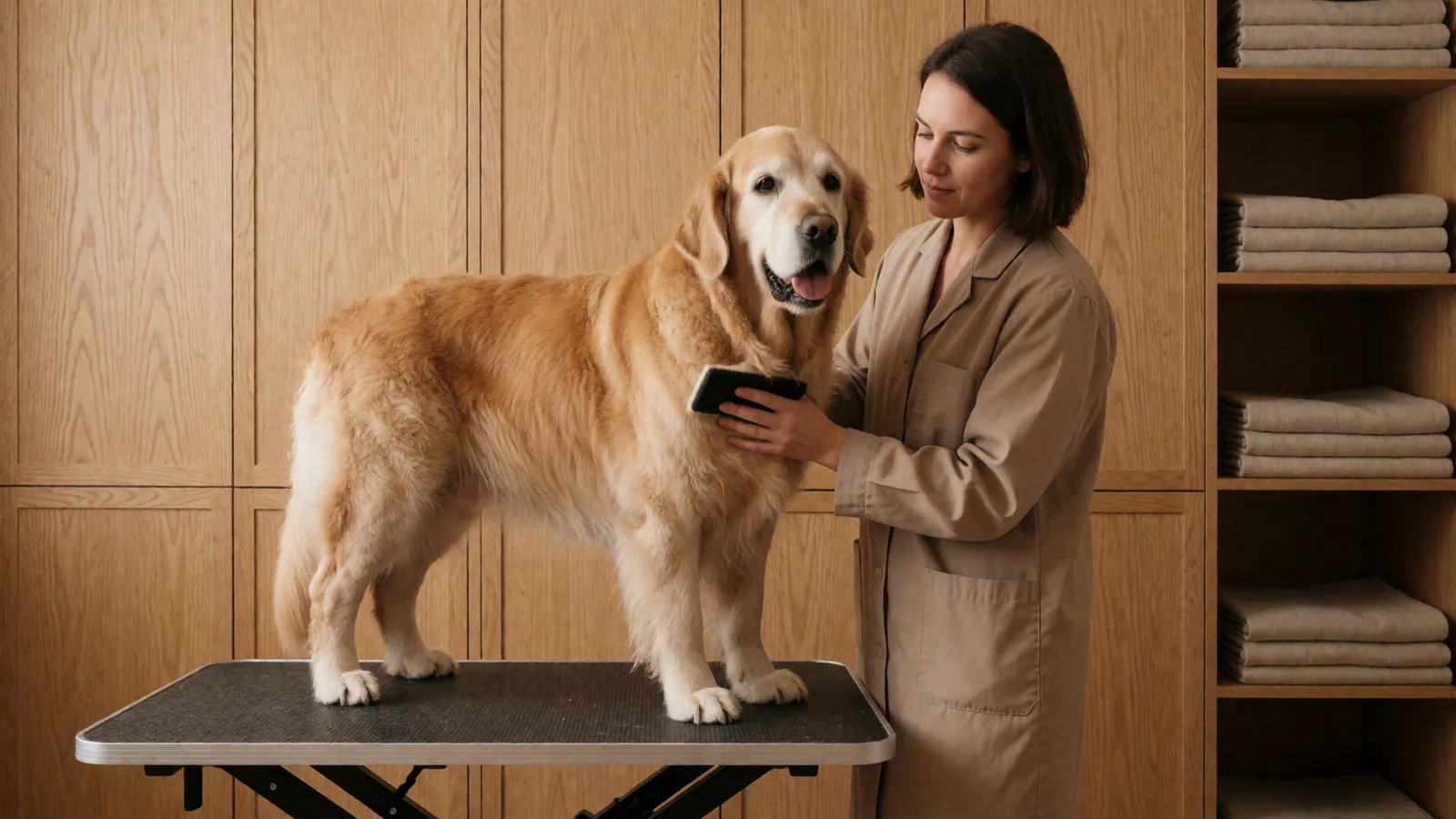
Senior and special-needs grooming in Woodside, NY starts from a simple position: an old, stiff, deaf, blind or medically complex animal is not groomed more slowly out of caution, but differently, because the ordinary pace of an appointment can be too much to ask of it. Two of our six stations are low hydraulic tables that drop to floor level, so a dog with sore hips or a cat that startles easily can be worked on without being lifted onto or off a surface. Where a whole groom is too much for one sitting, we split it across two visits in the same week rather than push through in one.
Flat-faced dogs and cats — pugs, bulldogs, persians and their relatives — struggle to manage their own body heat even on an ordinary day, and a bath and a hand-dry add real warmth on top of that. Their appointments are kept short, cool and unhurried, with breaks built in rather than added only if something goes wrong, and we will never rush one of these animals to save fifteen minutes on the clock. The same caution applies to any animal that seems distressed by heat, regardless of its face shape.
Deaf and blind animals are groomed by touch and by a consistent, predictable routine rather than by voice, since a startle from an unseen or unheard approach is the single most common cause of a bad reaction in either. If a veterinarian is treating your dog or cat for arthritis, a heart condition or anything else, tell us plainly what it is: we will not diagnose it or offer an opinion on the treatment, but knowing changes how long we work, how many breaks we take, and how we position and support the animal. See /matting-policy.html and /first-visit.html.
Tables that never require lifting
Two of the six stations exist specifically so nobody has to be lifted on or off them.
Low hydraulic tables
Two of our six grooming stations drop all the way to floor level, so a stiff, heavy or nervous animal can walk on rather than be lifted, and the table is then raised slowly to a comfortable working height once the animal is settled on it. Nobody here lifts an 80lb dog onto a table as a matter of routine.
Getting on and off, both ways
The same care applies at the end of the appointment — the table is lowered back to the floor before your animal is asked to step off it, rather than lifted down from height. It takes an extra minute and it avoids a jump or a fall that could easily hurt a stiff or arthritic joint. We would rather take the extra minute at both ends of the appointment than risk a jump that undoes everything careful about the rest of the visit.
A ramp into the bath, not a lift
Both walk-in tubs have a ramp and a non-slip floor, built for exactly this reason, so a large or unsteady dog walks into the water rather than being carried or hoisted over the side. A cat or small pet skips the tub altogether and is washed, where washing is needed, at the table instead. Carrying a heavy or unsteady dog over the side of a tub is exactly the kind of moment an accident happens, for the dog and for whoever is carrying it.
Support throughout, not just at the start
An older or unsteady animal is physically supported through the whole appointment, not just helped on and off the table, because standing unaided for an hour is a lot to ask of stiff hips or weak hindquarters. A sling, a hand under the chest, or simply a shorter working position are all used as the animal needs. Which of these we use depends entirely on the individual animal in front of us, decided at the coat check rather than applied the same way to every senior dog that comes through the door.
Why this matters more than it sounds
A fall or an awkward lift is how a grooming visit turns into a veterinary one, and the low tables and ramps exist specifically to make that far less likely. It is a small piece of equipment that quietly does a great deal of the actual welfare work in a senior appointment. We would rather spend the money on the equipment once than explain to an owner afterwards why an ordinary appointment went wrong.
Split appointments, frequent breaks, no extra charge
The time this takes is treated as part of the job, not an inconvenience billed back to you.
Splitting a groom across two visits
Where a whole appointment is too much to ask of an animal in one sitting, we do half of it one day and the rest a few days later in the same week, rather than finishing everything today regardless of how the animal is coping. Both halves together cost the same as the single groom would have. Which half comes first is decided by what the animal can manage that day, usually the bath and the nails before the more time-consuming haircut.
Breaks, on the animal's schedule
An older or anxious animal gets a rest in the open bay whenever it needs one, not only at fixed points in the appointment, and the groom simply continues once it has settled again. A visit with three short breaks in it is not a failed appointment; it is what a senior appointment often looks like. Nobody working here treats a break as lost time, and the appointment is booked with enough room in it that a rest never turns into a rush to catch up afterwards.
No extra charge for the extra time
None of this — the splitting, the breaks, the slower pace — adds anything to the price of the groom itself. The time is built into how a senior or special-needs appointment is booked from the start, and you are never billed for the accommodation your animal genuinely needed. We would rather price this fairly and consistently for every senior animal than treat patience as a premium service only some owners can afford.
Booking realistically from the start
Tell us on the phone that your animal is older, anxious or has a specific condition, and we book accordingly rather than fit a senior groom into a standard slot and run over. It is far easier to plan for this in advance than to interrupt an appointment already under way. A ten-second mention when you call is genuinely all it takes, and it means the day's whole schedule accounts for your animal properly from the very first booking.
What happens if it is still too much
If an animal genuinely cannot continue even with breaks and a lower table, we stop, you are called, and the rest is rescheduled rather than pushed through. Welfare comes before finishing the haircut on every visit, senior or otherwise, and that is not a rule we treat as optional here. You are never charged for a groom that was not finished, and rescheduling the remainder costs nothing beyond the time it takes to find a slot that suits you both.
Flat-faced breeds, sensory loss and medical conditions
Three different reasons an appointment needs to be handled differently, each treated on its own terms.
Flat-faced breeds and heat
Pugs, bulldogs, persians and other flat-faced animals manage their own body heat poorly even on an ordinary day, and a bath followed by a hand-dry adds real warmth on top of whatever the day is already doing. Their appointments are kept short and cool, with breaks built in from the start rather than added only once something looks wrong. A fan and a cooler part of the room are used for these appointments whenever the weather makes it worth doing.
Deaf animals
Groomed by touch and by a routine that stays the same visit to visit, since a deaf animal cannot be warned by voice before it is touched or moved and relies instead on predictability to feel safe. We approach from where it can see us and keep contact steady rather than starting and stopping unpredictably. A hand kept in gentle contact throughout, rather than lifted away and reapplied, does more to keep a deaf dog calm here than anything we could say to it.
Blind animals
Groomed the same unhurried way, kept on the same table and in the same position as far as possible, and told what is happening through touch and a calm, consistent voice rather than surprised by sudden handling. A blind animal that knows what to expect next is generally far calmer than one being handled at random. Where we can, the same groomer sees the same blind animal every visit, since a familiar voice and a familiar pair of hands matter more here than almost anywhere else on this page.
Arthritis, heart conditions and other diagnosed problems
Tell us plainly what a veterinarian is currently treating, because it changes practical decisions — how long we work before a break, how the animal is positioned and supported, and how quickly we stop if something looks uncomfortable. We will not diagnose a condition or comment on its treatment; that stays between you and your veterinarian, and we work within whatever they have told you.
When grooming should wait for a veterinarian first
A new limp, sudden reluctance to be touched, laboured breathing or obvious pain is not something we will groom around without a veterinarian having seen it first, regardless of how due the coat is. We would rather reschedule and ask you to get it checked than proceed and risk making a real problem worse. This costs us an appointment slot and it is worth it every time, because a coat can always wait a week and a genuine medical problem generally cannot.
Senior & special needs in western Queens
Grooming for senior and special-needs animals: low tables dropped to the floor, appointments split across two visits where that helps, frequent breaks, and no extra charge for any of the extra time it takes.
It starts the same way whatever you have booked: both hands over the whole animal before anything is switched on, so we find what is under the top layer rather than discover it halfway through. Then you are told the price and the finish time out loud, before you leave the building. If the coat turns out to be worse than it looked, we stop and call you, and you decide what happens next rather than finding out at collection.

Grooming is not veterinary care. Grooming is grooming, not veterinary care. This page describes a service we offer. It is general information, and it is not a diagnosis, a treatment or veterinary advice for any particular animal. We are groomers, not veterinarians — we do not diagnose, we do not prescribe and we do not treat medical conditions. If your pet has a wound, a lump, an ear or skin problem, a limp or anything that worries you, speak to a licensed veterinarian who can actually examine it.
How we handle your animal. We do not sedate animals and we never will — sedation is a veterinary decision made by a veterinarian, not a grooming shortcut. We use no heated cage dryers of any kind, and no animal is ever left alone with a dryer running. Every pet is hand-dried by the person grooming it. If your animal tells us clearly that it has had enough, we stop, and you get an honest conversation instead of a finished haircut.
Questions
Senior & special needs — the questions we are asked most
Does it cost more to groom an older or disabled pet?
No. The price is set by the size of the animal and the job being done, the same as any other appointment — a full groom is $85 to $165 depending on size, and a bath and brush is $55 to $110. The low table, the extra breaks and a groom split across two visits, if your animal needs any of that, do not add anything to those figures.
My dog cannot stand for very long. Can you still groom him?
Yes. Two of our six stations are low hydraulic tables that drop to floor level, so he can walk on rather than be lifted, and we support him through the appointment rather than expecting him to stand unaided the whole time. If standing for the full groom is genuinely too much, we split it across two visits in the same week instead.
Is it safe to groom a flat-faced dog or cat?
Yes, with real care taken around heat. Pugs, bulldogs, persians and similar breeds manage their own body heat poorly, and a bath and dry adds warmth on top of an ordinary day, so their appointments are kept short, cool and unhurried with breaks built in from the start. We will never rush one of these animals to finish a few minutes sooner.
Can you groom a deaf or blind dog?
Yes, and telling us in advance helps us prepare properly. A deaf animal is approached from where it can see us and handled with a steady, predictable routine rather than being surprised by sudden touch, and a blind animal is kept in the same position and told what is happening through touch and a calm voice. Both tend to do noticeably better with consistency than with speed.
My dog has a heart condition. Should I tell the groomer?
Yes, always, even though we cannot treat or advise on it ourselves. Knowing what a veterinarian is currently treating changes practical decisions on our side — how long we work before a break, how your dog is positioned, and how quickly we stop if anything looks uncomfortable. We will never diagnose a condition or comment on its treatment; that stays between you and your veterinarian.
Can my senior dog's groom be split across more than one visit?
Yes, and it is a genuinely common request rather than an unusual one. We typically do half the groom one day and the rest a few days later in the same week, at no extra cost beyond the ordinary price of the groom, rather than pushing through a whole appointment that has clearly become too much for the animal in front of us.
What if my pet gets tired or distressed partway through?
We stop. An older or anxious animal gets a rest in an open resting bay for as long as it needs, and the groom continues once it has settled — sometimes several times in one visit. If it genuinely cannot continue even with breaks, we call you, stop for the day, and reschedule the rest rather than finishing at the animal's expense.
Will you tell me if you think my pet needs a veterinarian rather than a groom?
Yes, plainly and every time. A new limp, obvious pain, laboured breathing or a sudden reluctance to be touched is not something we will groom around — we say so, explain exactly what we noticed, and suggest rescheduling until a veterinarian has seen your animal, rather than proceeding and risking making a real problem worse.
Related
Usually booked alongside this
Cat & Small Pet
Cat grooming
A full cat groom — bath, hand-dry, comb-out and nails — in a separate quiet room with its own door, booked at roughly twice the length the job needs, with no sedation, ever.
Read more
Cat & Small Pet
Cat lion cut
The full clip for a long-haired cat whose coat has gone past what combing can manage, done slowly on skin that nicks easily, with the reasons behind it pointed at a veterinarian rather than guessed at here.
Read more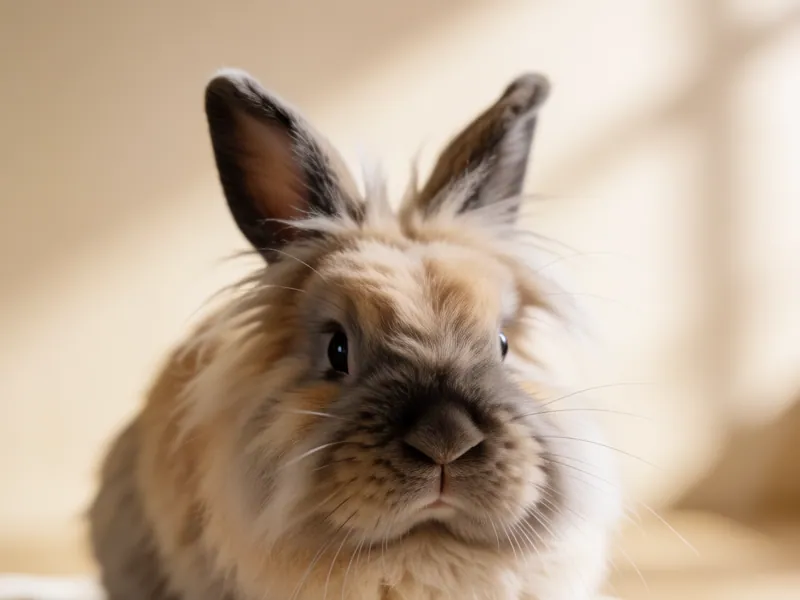
Cat & Small Pet
Rabbits & small pets
Combing, nails and a coat check for rabbits and guinea pigs, done in short sittings — often on your lap rather than a table — with no bath, because bathing a rabbit is genuinely dangerous to it.
Read moreA price agreed before the clippers come out
Book an appointment
Call the salon with your pet's breed, weight and roughly when it was last groomed, and we will give you the price and the honest timing on the phone. Nails, ears and sanitary tidies are walk-in whenever we are quiet, and Saturday morning is a dedicated walk-in nail clinic.