At a glance
The commitments this trade can actually be judged on
Every one of these is written down here rather than only promised out loud, so you can hold us to it.
- No heated cage dryers of any kind, anywhere in the building.
- No animal is ever left alone with a dryer running.
- No sedation, ever — it is a veterinary decision, not a grooming shortcut.
- One groomer, one animal, one table for the whole appointment.
- Low hydraulic tables, so nobody is lifted onto or off a table.
- The grooming loop is a safety strap, never an unattended restraint.
- Short, cool, unhurried appointments with breaks for flat-faced breeds.
- Senior and arthritic dogs groomed in halves where that helps.
- We stop the moment an animal tells us it has had enough.
Not negotiable
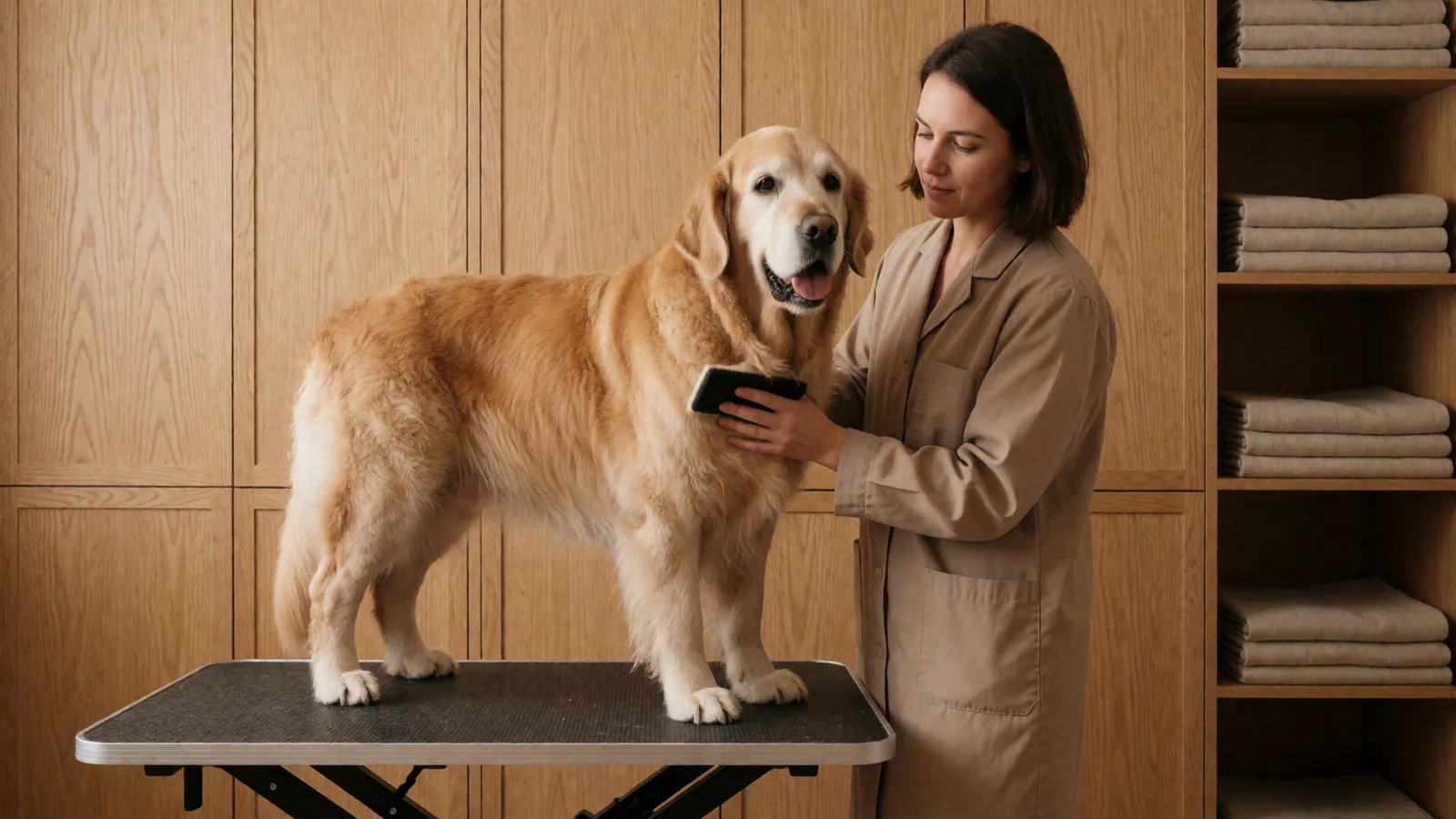
No cage dryers. No sedation. Not ever.
These are the two rules we will not bend on, whatever a busy day or a difficult dog might tempt a salon to do instead.
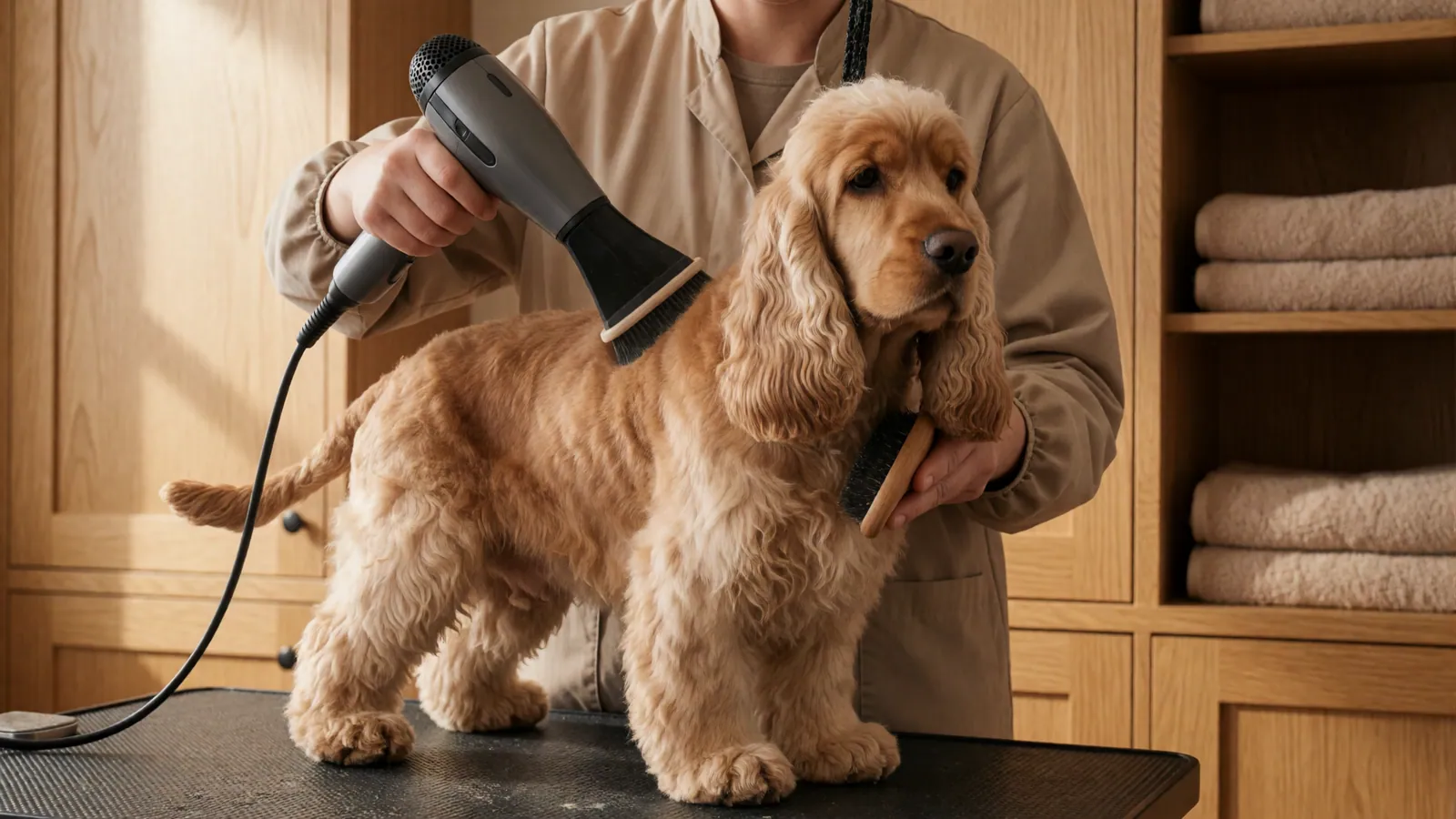
Every pet here is hand-dried at the table by the person grooming it, and nothing is ever left alone with a dryer running. There is no heated cage dryer in this building and there never has been — they are how animals get hurt in this trade, hand-drying simply takes longer and costs us money, and that trade-off is not up for discussion. We do not sedate, and we never will, for exactly the same reason: sedation is a veterinary decision that belongs to a veterinarian who has actually examined the animal, and a grooming salon offering it is offering something it has no business offering, however difficult the dog in front of us might be.
How the table itself is safe
One groomer, one animal, one table
Three separate decisions that all point the same way: nobody handling your animal is rushed, and nobody handling your animal is doing it alone.
One groomer, one animal
Whoever starts your dog's appointment finishes it, rather than passing your dog between a bather, a clipper and a finisher. It matters for the haircut, and it matters far more for a nervous dog, who has to trust one person for the length of the appointment instead of three people for a fraction of it each.
Low hydraulic tables
Two of our six stations are low hydraulic tables that drop right to the floor, so a stiff old labrador or a heavy, nervous dog walks on and off rather than being lifted. We will use one for your dog whenever it would help, whatever the reason.
The grooming loop
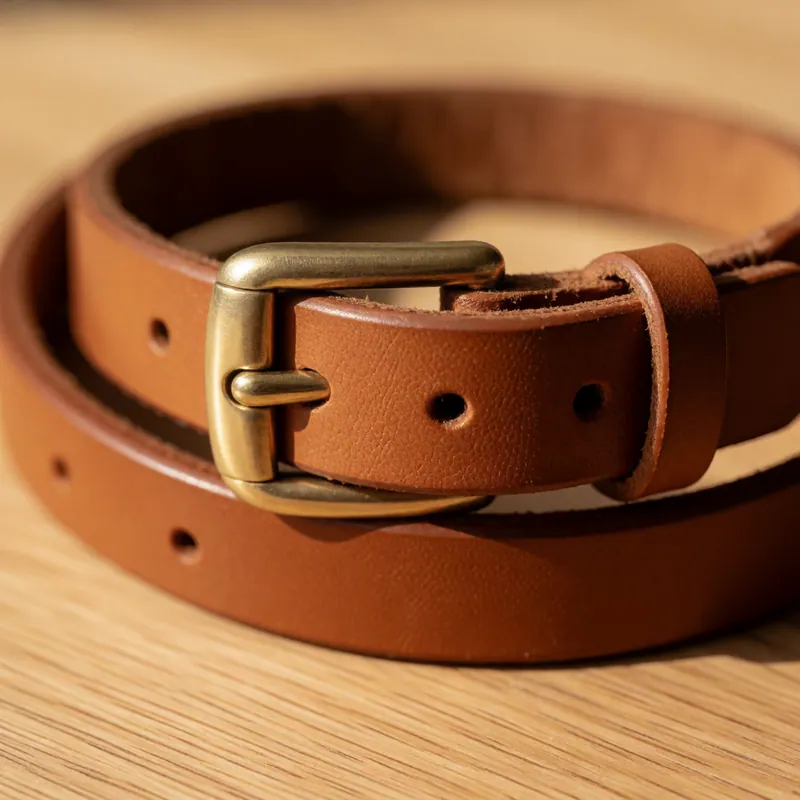
A soft strap clipped to the table that stops a dog stepping or jumping off while it is being handled, the same idea as a seatbelt rather than a restraint used to hold a struggling animal still. It is never tightened to force stillness, and an animal is never left on the table, in the loop or out of it, without the person grooming it standing right there.
Built around the animal in front of us
Appointments that adjust to the dog, not the other way round
Flat-faced breeds
Bulldogs, pugs and other flat-faced dogs overheat easily, so their appointments are booked short, cool and unhurried, with breaks built in as standard. We will never rush a flat-faced dog to save fifteen minutes, whatever the day looks like on the book.
Senior and arthritic dogs
Standing for a full appointment is a lot to ask of an old or arthritic dog, so senior appointments are booked long and, where it helps, split into two shorter visits rather than one that pushes through discomfort to get finished.
Deaf and blind dogs
We are told before your dog is touched, we approach from where it can feel us coming rather than surprise it, and a hand stays in gentle contact throughout so there is never a moment it cannot tell where we are. The appointment simply runs a little slower.
The dogs this page matters most to
Nervous dogs, and dogs who have bitten somebody before
Tell us honestly when you book. It is the single most useful thing you can do for your dog, and it changes how we book the appointment, never whether we will take it.
A nervous or previously-bitten dog gets free, short introductory visits before we ever attempt a full groom — sometimes several of them, with nothing happening beyond a few minutes on the table, a treat, and the ordinary sounds of the salon in the background. We build up from there at whatever pace the dog needs, and we would rather spend three unpaid visits earning a dog's trust than force one appointment that ends badly for everybody, including the dog.
The one rule that overrides all the others
What we do when an animal tells us it has had enough
Some animals have a limit, and reaching it is not a training failure or a reason to push harder.
If your animal tells us clearly that it has had enough — struggling, shutting down, or simply refusing to settle no matter how we adjust — we stop. You get a phone call, an honest account of how far we got, a plan for finishing another day, and a price for the part of the groom that was actually completed rather than a bill for the whole thing. We would rather see your dog again in a week, calmer, than force a single finished haircut today.
Written down, not just promised
Our policy, in full
The price is agreed before we start
You are told the number at the coat check, before anything is switched on. If we find more coat trouble than we could see, we stop and call you. You are never handed a bill with a line on it you have not heard of.
Welfare beats the haircut, every time
If finishing what you asked for would mean hurting your animal, we will not finish it. That means half a groom sometimes, a shorter length than you wanted sometimes, and a refund of the difference always.
We stop when your animal says stop
Some pets have a limit, and it is not a failure of nerve to respect it. You get a call, a plan, and a part-groom price. We would rather see you again in three weeks than never again in two hours.
We tell you when it is a vet's job
A groomer who tries to be a veterinarian is a danger to your animal. Anything that looks like a wound, an infection, a lump, a parasite problem or pain gets pointed at and gets a straight recommendation to see a veterinarian — never a diagnosis and never a treatment from us.
If we get it wrong, we fix it
A finish you are not happy with comes back within seven days and gets put right at no charge. If we cannot put it right, you do not pay for it. Nicks and clipper irritation are rare but they are real, especially on matted coats — we will tell you the same day it happens, not let you find it at home.
How we handle your animal. We do not sedate animals and we never will — sedation is a veterinary decision made by a veterinarian, not a grooming shortcut. We use no heated cage dryers of any kind, and no animal is ever left alone with a dryer running. Every pet is hand-dried by the person grooming it. If your animal tells us clearly that it has had enough, we stop, and you get an honest conversation instead of a finished haircut.
Grooming is not veterinary care. Grooming is grooming, not veterinary care. This page describes a service we offer. It is general information, and it is not a diagnosis, a treatment or veterinary advice for any particular animal. We are groomers, not veterinarians — we do not diagnose, we do not prescribe and we do not treat medical conditions. If your pet has a wound, a lump, an ear or skin problem, a limp or anything that worries you, speak to a licensed veterinarian who can actually examine it.
We do not claim anyone else's approval. Woodside Pet Grooming, LLC is not certified, accredited, inspected or endorsed by any grooming association, school or industry body, and this site does not claim otherwise. What we describe on these pages is what we do and how we do it, in plain language, so you can judge it for yourself and ask us about any of it.
Read more
Where to go next
What happens at a first appointment
Including the coat check every animal gets before anything starts. Your first visit.
How an appointment actually runs
From the phone call to collection. How it works.
Look round the salon
The stations, the tubs and the low tables described on this page. The salon.
Questions
Safety and handling — the questions we are asked most
Do you ever sedate a nervous or difficult dog?
No, never, under any circumstance. Sedating an animal is a medical decision that belongs to a veterinarian who has examined it, not a shortcut a grooming salon is entitled to offer. What we do instead with a nervous dog is book longer, use one consistent groomer, and offer free short introductory visits before we ever attempt a full groom.
What actually is a grooming loop, and is my dog left in it alone?
It is a soft strap clipped to the table that stops a dog stepping or jumping off while it is being handled, the same idea as a seatbelt rather than a restraint used to hold a struggling animal still. It is never used to leave an animal unattended, and a dog is never left on the table, in the loop or out of it, without the person grooming it standing right there.
How many people handle my dog during a groom?
One. Whoever starts your dog's appointment finishes it, on one table, rather than passing your dog between a bather, a clipper and a finisher. It matters for consistency, and it matters considerably more for a nervous dog, who only has to learn to trust one person for the length of the appointment instead of three.
My dog is old and cannot stand for long. What do you do differently?
We book longer and work in halves where we need to. Two of our six tables are low hydraulic tables that drop to the floor, so an arthritic or heavy dog walks on rather than being lifted, and we build in rest breaks rather than push through a groom in one sitting. If a full groom is genuinely too much in one visit, we will happily do half today and the rest later in the week at no extra charge for the second appointment.
Is a deaf or blind dog safe to bring to you?
Yes. We are told before your dog is touched, we approach from where it can feel us coming rather than surprise it, and we keep a hand in gentle contact throughout so there is never a moment your dog cannot tell where we are. It usually means a slightly longer, calmer appointment, which we build in as standard rather than charge extra for.
My dog has bitten a groomer before. Will you still take him?
Yes, and we would much rather you told us than have us find out ourselves partway through an appointment. Tell us honestly when you book, and we will start with a free short introductory visit rather than a full groom, build up over as many visits as it takes, and stop the moment your dog tells us it has had enough.
What happens if my dog overheats or gets distressed partway through?
We stop. Every appointment for a flat-faced breed in particular is booked short, cool and unhurried with breaks built in, and if any dog shows real distress we do not push on to finish the haircut. You get a phone call, an honest account of how far we got, and a price for the part of the groom that was actually completed.
Are the low hydraulic tables only for big or old dogs?
No, they are simply more obviously useful for a stiff senior, an anxious rescue, or a dog too heavy to lift safely, which is why we mention them most in that context. Any dog can be groomed on one, and we will use one for yours if it would help, whatever the reason.
Nervous, senior, or simply cautious
Tell us before you book
A sentence or two about your dog when you call — nervous, deaf, arthritic, has bitten before, overheats easily — changes how we book the appointment, not whether we will take it. We would always rather know in advance.